Dear all,
These are some of the thoughts for the exhibition for Earth Day at The Botanical Gardens:
Preparation
Siva, Airani and I managed to pack the necessary items for the event in only an hour’s time. Off we go the next day to set up shop at Botanical Gardens. In my opinion, it just shows we are getting more and efficient in setting up mobile exhibits. All we need now are better posters (Replace those battered ones) and probably invest in display stands, transport boxes for specimens and equipments (pens, markers, scissors, yarn, etc.) and we can set up shop at any place and any time.
Setup
Airani and I did the setup. As usual, once I pulled out our star, the dugong, it drew a crowd before we began putting up our posters. So for those who don’t want any bother before opening shop, leave the star to the last minute. By the way, anybody knows the gender of the dugong. I have got a couple of people asking. Some even ask for its name. I think I will start calling it “Dewi”. (I thought I hear some screams.) Siva, maybe we can have a “Name Our Star, the Dugong” competition just for fun.
Crowd and Guiding
Traffic was not that heavy but the constant stream of people kept me busy throughout the event. Thank you Airani and Dinesh for the help! Most of the time, I’m alone. Later I know from Siva that I could actually abandon the booth to see the film or join in the talk. But talking to the public was really a good way of exchanging information. Did you know horseshoe crab is actually considered a delicacy in Penang and Thailand?
Since most of the time, I was the only one manning of the booth; I was not able to attend to all the people at the booth at the same time. I realized some public will wait by reading the posters on the easel that were put in front of the table before I finished with another group to attend to them. Next time round, we can try putting a few interesting posters in front of the booth to hold on to the crowd before we have time to attend to them. By the way, the two posters on the easel were “Is there marine life in Singapore?” and a self made “International Coastal Cleanup Singapore Process”
Next, to all fellow mobile exhibitors, I am sorry to announce the sea urchin specimen had decided to leave us and joined its brethren either up there or down below depending on its karma. (Up there I hope, since it sacrificed its life for the benefit of educating the public.)
Actually, what happened was someone picked up the specimen and I wanted to hold it for her. In the process of the transfer, it dropped, bounced on the table, rolled off the side of the table and kamikaze like Humpty Dumpty. I am sorry for the lost.
I comforted her and ensured her that it would be alright as museum was already prepared for the lost by bringing them out for display. She did offer to compensate but I refused. I did pick up the pieces and any adventurous soul can try to glue Humpty Dumpty back again. Now I think we should have some idea on what to do with the specimen in case they break, especially those in bottles. What should we do if Dewi decides to join Humpty Dumpty the sea urchin? Would the specimen boxes (plastic one) come in handy?
Tearing Down
Tearing down was only a matter of minutes and as Siva was waiting for me at the porch with horseshoe crab in his hand, he had to entertain the crowd at the porch. Finally did some guiding. Ha ha ha!
Yup,Yup! That’s all. Suppose to be only four paragraphs. Sorry that it turned out to be a full one and a half page report.
Chen Kee… Off to sew a pillow case for his teddy bears…
25 April 2007


30 September 2006
Toddycats Exhibition at NLB
For the last 2 saturdays I have been stationed at National Library for a Toddycats exhibition in conjunction with Eco 4 the world's UNEP Passage of Hope photo exhibition. Being more of a regional perspective, our little booth brings a local perspective to biodiversity conservation.

Eco4theworld's Passage of Hope travelling exhibition.
Doing this partly as my project for NEA's Young Environmental Envoy, the toddycats exhibit was unfotunately the only 'booth' there. To rectify the problem, I attempted to bring the different groups to the public by helping them distribute their flyes and printed materials. It was an excellent exercise at consolidating the efforts of the different green groups in Singapore and complimented each other very well.

Thanks to Joe from SEC's Green Volunteer Network, Ria from Wild Singapore for providing their excellent Wildfilms presentations, Vilma from NSS for the free Nature Watch which were very popular with everyone, Abby from Blue Water Volunteers for their flyers and all the help from the toddycats, from planning to actual day manpower. Many were bugged by me for months and others responded brilliant to last minute calls for help from the monkey. Even without script, trained Pedal Ubin guide, Andy D was able to help with the exhibit effortlessly. Of course he mentioned that hearing me regale the public with the same stories every 5 minutes helped!

The first Saturday, due to shortage in manpower, we only had the monkey, lots of freebies and panels galore. Many people were wondering if we were selling anything till we told them that there were free things to be had. After 1pm, the lunch time crowd started coming in and it was a jam!

The only picture of monkey over the 2 weekends.
As the exhibition coincided with the International Coastal Cleanup in Singapore, one of the biggest event in Toddycats calendar, the monkey had a shortage of manpower. However, it did not stop us from spreading word of the coastal cleanup and the surprising biodiversity in Singapore.
"Did you know there are dolphins in Singapore" worked brilliantly as an opening line for me on the first Saturday.

On top of that, we had 2 videos from WildFilms, one of which I spent a whole night converting from powerpoint to quicktime while adding a soundtrack from Snow Patrol courtesy of Hua Qin. It proved to be worth the time well spent. We introduced more than 100 people about the marine biodiversity in Singapore, the curse of the plastics and what people can do!
The next saturday, we brought on the help of the specimens, a proven crowd-magnet over past exhibitions.

Time was spent packing the exhibits the day before and on the day itself, 2 toddycats met me in school along with Wai who was kind enough to come and give me a hand loading the specimens into the cab, pass me the BWV flyers and also lend me her camera or there would have been no photos of the day! Interestingly, most of the toddycats that helped out explaining the exhibits were mostly non-biology students but we had no problems holding their attention. There was the geographer monkey, an accountant and an accurer. In fact, our veteran is a bear making mechanical engineer! We may not know scientific name and physiology but we sent the public home with awareness of biodiversity conservation in Singapore anyways.

We had with us a Malayan Pangolin, a Colugo, a Hawksbill Turtle hatchling, a Black Spitting Cobra, a Dugong, a Knobbly seastar and a Beach Horseshoe Crab! People listened on, captivated by the stories and the opening line never failed me.
"Did you know all these animals can be found in Singapore?"
At times I felt like the mobile salesman you find outside NTUC selling his wares behind a table to a crowd of curious housewives. At one point when the booth was left alone save for a monkey, I had to resort to addressing all 10 people in front of me at the same time.

Still, it paid off but nothing beats having and seeing my volunteers attend to the interested public, giving them personalized attention. It's especially great seeing the kids take it all in.
I met a kid who told his mama that they should go to a beach right now and bring a horseshoe crab home to keep in his tank. Hopefully my asking him if he had a beach or mangrove at home to keep the horseshoe crab alive and happy persuaded him otherwise. I doubt he has a forest at home to keep the colugos happy either. Better keep it out there in the wild for all the share.

There were encouraging moments when I saw a returning visitor. A mother who visited the booth on the first Saturday with her two kids returned again to show support to our exhibition on the 2nd Saturday after hearing from me that there would be real specimens the second time round! In fact, the kids loved the specimens so much, I ran out of stories to feed their hungry enquiring minds.
It also helped that we played a little "where can these animals be found" game with the kids and adults alike, with NSS Nature Watch magazines to be given away as prize. Being so popular, the magazine had no problems enticing even the adults to play our game. Before we knew it, 200 copies of the magazine was given out over the two Saturdays! In fact, save for a few brochures, we gave out almost everything we brought to the library! Our bags always came back lighter.

Playing games.
At around 4pm, we packed up and ICCS zone captain drove down all the way from the museum to pick me and the specimens up from the library back to the school. It was a good way to spend my weekend. Talking for 6 hours nonstop was worth it!

Unpacked and home sweet home.
For more photos, see my flickr set.
Eco4theworld's Passage of Hope travelling exhibition.
Doing this partly as my project for NEA's Young Environmental Envoy, the toddycats exhibit was unfotunately the only 'booth' there. To rectify the problem, I attempted to bring the different groups to the public by helping them distribute their flyes and printed materials. It was an excellent exercise at consolidating the efforts of the different green groups in Singapore and complimented each other very well.
Thanks to Joe from SEC's Green Volunteer Network, Ria from Wild Singapore for providing their excellent Wildfilms presentations, Vilma from NSS for the free Nature Watch which were very popular with everyone, Abby from Blue Water Volunteers for their flyers and all the help from the toddycats, from planning to actual day manpower. Many were bugged by me for months and others responded brilliant to last minute calls for help from the monkey. Even without script, trained Pedal Ubin guide, Andy D was able to help with the exhibit effortlessly. Of course he mentioned that hearing me regale the public with the same stories every 5 minutes helped!
The first Saturday, due to shortage in manpower, we only had the monkey, lots of freebies and panels galore. Many people were wondering if we were selling anything till we told them that there were free things to be had. After 1pm, the lunch time crowd started coming in and it was a jam!
The only picture of monkey over the 2 weekends.
As the exhibition coincided with the International Coastal Cleanup in Singapore, one of the biggest event in Toddycats calendar, the monkey had a shortage of manpower. However, it did not stop us from spreading word of the coastal cleanup and the surprising biodiversity in Singapore.
"Did you know there are dolphins in Singapore" worked brilliantly as an opening line for me on the first Saturday.
On top of that, we had 2 videos from WildFilms, one of which I spent a whole night converting from powerpoint to quicktime while adding a soundtrack from Snow Patrol courtesy of Hua Qin. It proved to be worth the time well spent. We introduced more than 100 people about the marine biodiversity in Singapore, the curse of the plastics and what people can do!
The next saturday, we brought on the help of the specimens, a proven crowd-magnet over past exhibitions.
Time was spent packing the exhibits the day before and on the day itself, 2 toddycats met me in school along with Wai who was kind enough to come and give me a hand loading the specimens into the cab, pass me the BWV flyers and also lend me her camera or there would have been no photos of the day! Interestingly, most of the toddycats that helped out explaining the exhibits were mostly non-biology students but we had no problems holding their attention. There was the geographer monkey, an accountant and an accurer. In fact, our veteran is a bear making mechanical engineer! We may not know scientific name and physiology but we sent the public home with awareness of biodiversity conservation in Singapore anyways.
We had with us a Malayan Pangolin, a Colugo, a Hawksbill Turtle hatchling, a Black Spitting Cobra, a Dugong, a Knobbly seastar and a Beach Horseshoe Crab! People listened on, captivated by the stories and the opening line never failed me.
"Did you know all these animals can be found in Singapore?"
At times I felt like the mobile salesman you find outside NTUC selling his wares behind a table to a crowd of curious housewives. At one point when the booth was left alone save for a monkey, I had to resort to addressing all 10 people in front of me at the same time.
Still, it paid off but nothing beats having and seeing my volunteers attend to the interested public, giving them personalized attention. It's especially great seeing the kids take it all in.
I met a kid who told his mama that they should go to a beach right now and bring a horseshoe crab home to keep in his tank. Hopefully my asking him if he had a beach or mangrove at home to keep the horseshoe crab alive and happy persuaded him otherwise. I doubt he has a forest at home to keep the colugos happy either. Better keep it out there in the wild for all the share.
There were encouraging moments when I saw a returning visitor. A mother who visited the booth on the first Saturday with her two kids returned again to show support to our exhibition on the 2nd Saturday after hearing from me that there would be real specimens the second time round! In fact, the kids loved the specimens so much, I ran out of stories to feed their hungry enquiring minds.
It also helped that we played a little "where can these animals be found" game with the kids and adults alike, with NSS Nature Watch magazines to be given away as prize. Being so popular, the magazine had no problems enticing even the adults to play our game. Before we knew it, 200 copies of the magazine was given out over the two Saturdays! In fact, save for a few brochures, we gave out almost everything we brought to the library! Our bags always came back lighter.
Playing games.
At around 4pm, we packed up and ICCS zone captain drove down all the way from the museum to pick me and the specimens up from the library back to the school. It was a good way to spend my weekend. Talking for 6 hours nonstop was worth it!
Unpacked and home sweet home.
For more photos, see my flickr set.
02 September 2006
Setting up exhibition for NYEF 2006
The night before the National Youth Environment Forum, organized by ECO Singapore and held at SMU School of Accounting on 2 September 2006, the security guard at SMU encountered a car load full of toddycats bustling up towards the building with panels and gear in tow.

While Siva, Weisong and Gwynne has the responsibility of presentation and caucus group discussion tomorrow, Yueat Tin and Chen Kee has the task of setting up the panel exhibition the night before due to logistics reasons. Luckily, Yueat Tin encountered more toddycats, namely Anand and November, at the NUS Masters of Environmental Management Lecture Series and managed to rope them in to help out in exchange for a free ride home! Along the way, the civet cats also managed to pick up an ECO member at the Energy and Climate Change talk that evening and got insider help from him.

After much shifting around to accomodate the feng shui and limitations of the venue, the exhibition team finally decided on a spot not so far or different from the originally assigned one. Setting up the exhibition display panels turned out easier than expected with the extra pairs of hands. We also managed to get extra display panels courtesy of our friendly organizers which helped very much.

After setting up and being very pleased with our handicraft, the team took photos and head off to supper, transfering photos and blogging this very account. But not before we arranged for the logistics for the next day which involves transporting the specimens for our booth from the museum in the morning.
The display includes mainly details about RMBR Toddycats and our activities, RMBR newsletters and museum roundtable flyers. At the same time we will also be displaying several specimens such as the dugong, horseshoe crab, knobbly sea star and the heart urchin.
All photos courtesy of Wong Yueat Tin.
While Siva, Weisong and Gwynne has the responsibility of presentation and caucus group discussion tomorrow, Yueat Tin and Chen Kee has the task of setting up the panel exhibition the night before due to logistics reasons. Luckily, Yueat Tin encountered more toddycats, namely Anand and November, at the NUS Masters of Environmental Management Lecture Series and managed to rope them in to help out in exchange for a free ride home! Along the way, the civet cats also managed to pick up an ECO member at the Energy and Climate Change talk that evening and got insider help from him.
After much shifting around to accomodate the feng shui and limitations of the venue, the exhibition team finally decided on a spot not so far or different from the originally assigned one. Setting up the exhibition display panels turned out easier than expected with the extra pairs of hands. We also managed to get extra display panels courtesy of our friendly organizers which helped very much.
After setting up and being very pleased with our handicraft, the team took photos and head off to supper, transfering photos and blogging this very account. But not before we arranged for the logistics for the next day which involves transporting the specimens for our booth from the museum in the morning.
The display includes mainly details about RMBR Toddycats and our activities, RMBR newsletters and museum roundtable flyers. At the same time we will also be displaying several specimens such as the dugong, horseshoe crab, knobbly sea star and the heart urchin.
All photos courtesy of Wong Yueat Tin.
01 September 2006
Activities this weekend
Hi all,
I'll be giving a talk at NUS LT31 at 12pm. It's in conjunction with the
ICCS. See Raffles Museum NewsI'm preparing that now! Dewi and Dongrong will setup an exhibition at LT31 for the session.
On Saturday, Gwynne and Wei Song will be facilitating at the National Youth Environment Seminar at SMU, where I'll give a10 minute presentation on behalf of NSS andd ACRES as well. This is the follow up to the amazingly informative and motivational pre-forum seminar last week.
Yueat Tin, Chen Kee and Kai Scene will setup and man an exhibition at SMU where they'll meet youth from various organisations. Airani just finished preparing the new set of name cards for all our exhibitions.
The International Coastal Cleanup Singapore Kranji team - Wei Song, Yueat Tin, Cheng Puay and Hua Qin - will be conducting a briefing and walk through of the site at Kranji in the afternoon, at the Sungei Buloh Wetlands Reserve. The Kranji team includes several other Toddycats who are handling data, site supervision and leaders of the NUS team.
November will be setting up and manning the ICCS exhibition (marine life and pollution issues) at an NEA exhibition at the National Library. We always partner some organisation for exhibitions so that their publicity will umbrella us and a wider picture of the issues is achieved.
Wai has been helping with the BBC crew filming snakes and crabs in the mangroves. That's been a dawn to dusk effort which was finally completely successful last night. I'll release the crabs at Sungei Buloh tomorrow.
The ICCS Otters led by Deputy Coordinators Angeline and Yueat Tin are communicating with groups to allocate sites for the cleanup and briefing new organisers, partnering up organisations at sites.
Zone Captains, Ng Kai Scene, Hwang Wei Song & Vu Tinh-ky, Ng Hua Qin, Dinesh N., Lim Chen Kee and Kok Oi Yee have recce-d their sites and are handling the management of groups coming on the 9th and 16th of September.
Talks have been given/allocated to about 20 schools and organisations so far, which Chien Fang has been coordinating.
I have to go prepare for my talk - this was meant to be a two liner note! But a lot is happening all the time. We just don't write that much about it.
More things lie ahead in the next three months: ICCS post-even debrief and analysis, Southern Ridges trail (briskwalk and cycling), Sungei Buloh Anniversary Walk, Public Gallery Guiding, the Annual Recruitment, recce of Mandai mangroves, etc.
Cheerio!
Siva
I'll be giving a talk at NUS LT31 at 12pm. It's in conjunction with the
ICCS. See Raffles Museum NewsI'm preparing that now! Dewi and Dongrong will setup an exhibition at LT31 for the session.
On Saturday, Gwynne and Wei Song will be facilitating at the National Youth Environment Seminar at SMU, where I'll give a10 minute presentation on behalf of NSS andd ACRES as well. This is the follow up to the amazingly informative and motivational pre-forum seminar last week.
Yueat Tin, Chen Kee and Kai Scene will setup and man an exhibition at SMU where they'll meet youth from various organisations. Airani just finished preparing the new set of name cards for all our exhibitions.
The International Coastal Cleanup Singapore Kranji team - Wei Song, Yueat Tin, Cheng Puay and Hua Qin - will be conducting a briefing and walk through of the site at Kranji in the afternoon, at the Sungei Buloh Wetlands Reserve. The Kranji team includes several other Toddycats who are handling data, site supervision and leaders of the NUS team.
November will be setting up and manning the ICCS exhibition (marine life and pollution issues) at an NEA exhibition at the National Library. We always partner some organisation for exhibitions so that their publicity will umbrella us and a wider picture of the issues is achieved.
Wai has been helping with the BBC crew filming snakes and crabs in the mangroves. That's been a dawn to dusk effort which was finally completely successful last night. I'll release the crabs at Sungei Buloh tomorrow.
The ICCS Otters led by Deputy Coordinators Angeline and Yueat Tin are communicating with groups to allocate sites for the cleanup and briefing new organisers, partnering up organisations at sites.
Zone Captains, Ng Kai Scene, Hwang Wei Song & Vu Tinh-ky, Ng Hua Qin, Dinesh N., Lim Chen Kee and Kok Oi Yee have recce-d their sites and are handling the management of groups coming on the 9th and 16th of September.
Talks have been given/allocated to about 20 schools and organisations so far, which Chien Fang has been coordinating.
I have to go prepare for my talk - this was meant to be a two liner note! But a lot is happening all the time. We just don't write that much about it.
More things lie ahead in the next three months: ICCS post-even debrief and analysis, Southern Ridges trail (briskwalk and cycling), Sungei Buloh Anniversary Walk, Public Gallery Guiding, the Annual Recruitment, recce of Mandai mangroves, etc.
Cheerio!
Siva
26 June 2006

25 June 2006

02 March 2006
NUS Open House
Toddycats on standby at the Public Gallery for NUS Open House
Saturday, 11 Mar 2006
Session 1 - 10am – 2pm: Oi Yee, Kiah Shen
Session 2 - 2pm – 6pm: Wei Siong, Oi Yee
Sunday, 12 Mar 2006
Session 3 - 10am - 2pm: Danwei, Kenneth, Airani, Ivan, Oi Yee (up to 12pm)
Session 4 - 2pm – 6pm: Airani, Ivan
See photos from NUS Open House 2004.
Saturday, 11 Mar 2006
Session 1 - 10am – 2pm: Oi Yee, Kiah Shen
Session 2 - 2pm – 6pm: Wei Siong, Oi Yee
Sunday, 12 Mar 2006
Session 3 - 10am - 2pm: Danwei, Kenneth, Airani, Ivan, Oi Yee (up to 12pm)
Session 4 - 2pm – 6pm: Airani, Ivan
See photos from NUS Open House 2004.
14 February 2006
My Ten-Cents worth of feedback about the Plastic Exhibition
Feedback about the Toddycats combined booth setup for the National Environment Agency's launch of "Why waste plastic bags, choose reusable bags" campaign at Parkway Parade Shopping Centre on Saturday, 11 Feb 2006. By Lim Chen Kee.
1. Conceptualization
At conceptualization, we have clearly stated our objectives and the theme of the exhibition, which we then designed our posters based on our objectives and theme. This is important because I realized when our booth is finally set up, our posters immediately became the focal point of the booth, making our booth relevant to the theme of the exhibitions.
The posters are well designed and suited for our objectives for the exhibition. The large pictures captured a lot of attention of by-passers especially the photograph of the turtle biting the plastics. However we should have stand-alone photographs of plastic litter for display and decoration.
2. Exhibition
What sort of people stopped by and what were their reactions?
More teachers and students from green clubs stopped by our booth than the general public. Since most of the former had not heard of ICCS, we used the opportunity to inform them about the cleanup and promote off-peak cleanups, which they could customise as small-group student projects with enhanced post-cleanup activities.
The general public was mostly attracted by the photo of the turtle on our posters, so we used that to initiate a conversation. Most of them were interested enough to want to be involved. However we were unable to attract the younger-aged public to our booth.
How effective was it?
We did not promote the message of reducing usage and recycling of plastics, as our focus was how marine litter, especially plastics, are harmful to nature and the environment. This focus did help to create an awareness as to why reducing plastics consumption and recycling would contribute to the protection of oceans, seas and shores and the animal life there. This was needed since it was not covered by other groups.
Was it worth it?
Yes, it is worth it. By being there, not only did we make the presence of the ICCS known; we also provided an avenue for groups who want to do more.
What did you learn from the other booths? What could we have done, had we more time?
Booths with bigger crowds used quizzes, puzzles and free gifts for the public. I don’t like the idea of using free gifts to entice the public [a Toddycats outlook], but I do think we should think about interactive activities in future. This will increase the effectiveness in spreading the message. We can also take a booth and with more space expand on the message.
What did you learn from the process?
I learned that if the audience is attracted by the posters and stopped to take a look, and there is someone who approaches them to talk to them, they would usually stay and listen. I missed a lot of opportunities by not engaging the split-second onlookers.
Other Comments:
I have a lot of fun and I think we did well for the exhibit in such a short time. To me, I feel that the mobile exhibits that we had discussed before can be done successfully and prove to be an effective tool to help spread environmental awareness if we plan well.
1. Conceptualization
At conceptualization, we have clearly stated our objectives and the theme of the exhibition, which we then designed our posters based on our objectives and theme. This is important because I realized when our booth is finally set up, our posters immediately became the focal point of the booth, making our booth relevant to the theme of the exhibitions.
The posters are well designed and suited for our objectives for the exhibition. The large pictures captured a lot of attention of by-passers especially the photograph of the turtle biting the plastics. However we should have stand-alone photographs of plastic litter for display and decoration.
2. Exhibition
What sort of people stopped by and what were their reactions?
More teachers and students from green clubs stopped by our booth than the general public. Since most of the former had not heard of ICCS, we used the opportunity to inform them about the cleanup and promote off-peak cleanups, which they could customise as small-group student projects with enhanced post-cleanup activities.
The general public was mostly attracted by the photo of the turtle on our posters, so we used that to initiate a conversation. Most of them were interested enough to want to be involved. However we were unable to attract the younger-aged public to our booth.
How effective was it?
We did not promote the message of reducing usage and recycling of plastics, as our focus was how marine litter, especially plastics, are harmful to nature and the environment. This focus did help to create an awareness as to why reducing plastics consumption and recycling would contribute to the protection of oceans, seas and shores and the animal life there. This was needed since it was not covered by other groups.
Was it worth it?
Yes, it is worth it. By being there, not only did we make the presence of the ICCS known; we also provided an avenue for groups who want to do more.
What did you learn from the other booths? What could we have done, had we more time?
Booths with bigger crowds used quizzes, puzzles and free gifts for the public. I don’t like the idea of using free gifts to entice the public [a Toddycats outlook], but I do think we should think about interactive activities in future. This will increase the effectiveness in spreading the message. We can also take a booth and with more space expand on the message.
What did you learn from the process?
I learned that if the audience is attracted by the posters and stopped to take a look, and there is someone who approaches them to talk to them, they would usually stay and listen. I missed a lot of opportunities by not engaging the split-second onlookers.
Other Comments:
I have a lot of fun and I think we did well for the exhibit in such a short time. To me, I feel that the mobile exhibits that we had discussed before can be done successfully and prove to be an effective tool to help spread environmental awareness if we plan well.
12 February 2006
Campaign to reduce wastage of plastic shopping bags
The campaign as launched on Saturday, 11 February 2006 at Parkway Parade.

At 8am, Weisong, Chenkee, Yueat Tin and I went down to Parkway Parade with RMBR newsletters and museum roundtable brochures. We were met by the team of girls from the RGS green club with their teacher Beng Chiak representing both NSS and RGS. The girls were earlier than us, with plastic bags already decorating our panels. Our school booths were also bustling with activity.

Before and after
It worried us for a while that our booth lacked half our titles and had no panels. The panel was 1 hour late but eventually arrived to our relief. Yueat Tin brought her laptop and customized a ICCS presentation to autorun at the booth.

Luckily, as promised by the organizers NEA, our titles were delivered minutes before the guest of honor, Dr Yacob Ibrahim, arrived and Weisong, the tall one in the group, kindly put it up for us.

The morning was very successful as most of the crowds were students and teachers who were participating in the launch and were very interested in the issue of marine trash caused by plastics. Many were interested in participating in ICCS, and organizing talks for their schools. However, other booths with games and free giveaways were decidedly more popular than ours. This could possibly be something we could look into next time. Books were also very popular as when the guest of honor visited our booth, A/P Simon Tay, the chairman of NEA, picked up the Chek Jawa guidebook sold by NSS and decided to buy a copy after browsing! On the other hand, SEC sold out their books within minutes of being swarmed by teachers.

Our booth design was also one of the cleanest, tidiest, yet informative one. The idea of using panels was convenient not just for setting up but presentation is clear and attractive. More would come to the booth if the set up was more interactive with quizzes, or things for people to do at our booth. Of course, more than ever, we realize the usefulness of the namecard we printed for Giving Tree as we did not have them this round, we felt their absence more.


Having a booth right beside NEA's was also useful as it gave us much chance to give feedback to them and learn qutie a bit more about plastic recycling. For example, plastic bags can actually be recycled by putting them in recycling bin, they will be collected. In fact, as long as any plastic bottles that are cleaned and not contaminated is recyclable. There were also much of an issue that reusable bags were being given out in plastic bags and NEA received due feedback.

Still, this is a good attempt by NEA and now if you see this sign at any of the supermarkets involved or any of the shops in Parkway Parade, you will know they are a participating outlet. During the launch, reusable bags printed with each of the supermarket's unique design was also given away.Sadly, the hypermart Giant that was in Parkway Parade was not a participating supermarket.

Pledge to use reusable bag or less plastic bags today!
At 8am, Weisong, Chenkee, Yueat Tin and I went down to Parkway Parade with RMBR newsletters and museum roundtable brochures. We were met by the team of girls from the RGS green club with their teacher Beng Chiak representing both NSS and RGS. The girls were earlier than us, with plastic bags already decorating our panels. Our school booths were also bustling with activity.
Before and after
It worried us for a while that our booth lacked half our titles and had no panels. The panel was 1 hour late but eventually arrived to our relief. Yueat Tin brought her laptop and customized a ICCS presentation to autorun at the booth.
Luckily, as promised by the organizers NEA, our titles were delivered minutes before the guest of honor, Dr Yacob Ibrahim, arrived and Weisong, the tall one in the group, kindly put it up for us.
The morning was very successful as most of the crowds were students and teachers who were participating in the launch and were very interested in the issue of marine trash caused by plastics. Many were interested in participating in ICCS, and organizing talks for their schools. However, other booths with games and free giveaways were decidedly more popular than ours. This could possibly be something we could look into next time. Books were also very popular as when the guest of honor visited our booth, A/P Simon Tay, the chairman of NEA, picked up the Chek Jawa guidebook sold by NSS and decided to buy a copy after browsing! On the other hand, SEC sold out their books within minutes of being swarmed by teachers.
Our booth design was also one of the cleanest, tidiest, yet informative one. The idea of using panels was convenient not just for setting up but presentation is clear and attractive. More would come to the booth if the set up was more interactive with quizzes, or things for people to do at our booth. Of course, more than ever, we realize the usefulness of the namecard we printed for Giving Tree as we did not have them this round, we felt their absence more.
Having a booth right beside NEA's was also useful as it gave us much chance to give feedback to them and learn qutie a bit more about plastic recycling. For example, plastic bags can actually be recycled by putting them in recycling bin, they will be collected. In fact, as long as any plastic bottles that are cleaned and not contaminated is recyclable. There were also much of an issue that reusable bags were being given out in plastic bags and NEA received due feedback.
Still, this is a good attempt by NEA and now if you see this sign at any of the supermarkets involved or any of the shops in Parkway Parade, you will know they are a participating outlet. During the launch, reusable bags printed with each of the supermarket's unique design was also given away.
Pledge to use reusable bag or less plastic bags today!
17 December 2005
Labrador Cleanup
Met Otterman and a bunch of helpful people yesterday afternoon for a quick cleanup of Labrador beach. Even bumped into some unexpected help in the form of a member of the public (a JC biology teacher), originally there to recce the place and take photographs, who kindly offered to chip in. Our main objective was to clear the beach of the glass fragments which littered the shore, but it was pretty amazing what kind of stuff (and the amount) we ended up hauling out. Otterman was a 1-man big-ass hauling machine. He claims that he was just about to enter into long haul mode when suddenly there was nothing left to haul though, and in retrospection I think it was somewhat easier than I was first fearing. In terms of pieces retrieved, glass takes the cake. Which is unusual because normally in clean-ups the main type of trash is plastic. NParks kindly offered logistical support with gloves (albeit the wrong kind) and canvas bags that was able to withstand glass, and even had some staff members meet me at the gate before the cleanup to pass me the equipment.
We cleared an estimated (didn't actually count) 200kg of trash from the beach in 1.5h, of which Otterman estimates about 75% (in terms of total pieces) was glass - with 20% plastic and 5% metal. Had to leave behind some really heavy tires which we'll feedback to the park staff about and have them get their clean-up team to retrieve. Most of the glass was concentrated at the part of the beach where the sand starts, and there was a lot of it especially at the bit after the fence demarcating the end of the beach. Many of the fragments had worn down sides and seemed to have been around for quite awhile.
Some thoughts about the cleanup. When people offer to provide gloves, must ask for the thick construction gloves, otherwise will have to arrange to bring our own. Arrange for some big burly guys to come later to exclusively provide muscle for hauling out the trash. Everything turned out rather well, all things considering. We weren't even sure if the 0.4m tide was going to be low enough, and it was relatively simple (too simple?) to send out a few emails to coordinate everything. Otterman thinks we didn't do enough publicity, which I disagreed since I didn't really plan for having clueless members of the public along, who need to be briefed and reminded and babysat. Perhaps next time we will advertise on Habitatnews as well.
As we were about to leave at sunset, Chee mentioned that there were 2 octopuses hanging out under the jetty. And sure enough, they were there just lounging around in the open. Amazing. Don't think I've ever seen 1 much less 2 octopuses at Labrador. They must be getting ready to hunt for some poor unsuspecting crabs coming out to feed at dusk. We also saw the Little Heron coming out to hunt as we were leaving while the sun set. There were also loads of fireworms. We spotted one that had just stunned itself a snapping shrimp and was about to polish it off when it was disturbed by us lifting the piece of fibreglass that was lying on top of it. Poor thing. I hope it managed to get back to its dinner after we left.
To follow-up: Will email volunteers to thank them again for coming. And email the NParks staff to let them know about the outcome and let them know about the bulky items which they can help transport out.
We cleared an estimated (didn't actually count) 200kg of trash from the beach in 1.5h, of which Otterman estimates about 75% (in terms of total pieces) was glass - with 20% plastic and 5% metal. Had to leave behind some really heavy tires which we'll feedback to the park staff about and have them get their clean-up team to retrieve. Most of the glass was concentrated at the part of the beach where the sand starts, and there was a lot of it especially at the bit after the fence demarcating the end of the beach. Many of the fragments had worn down sides and seemed to have been around for quite awhile.
Some thoughts about the cleanup. When people offer to provide gloves, must ask for the thick construction gloves, otherwise will have to arrange to bring our own. Arrange for some big burly guys to come later to exclusively provide muscle for hauling out the trash. Everything turned out rather well, all things considering. We weren't even sure if the 0.4m tide was going to be low enough, and it was relatively simple (too simple?) to send out a few emails to coordinate everything. Otterman thinks we didn't do enough publicity, which I disagreed since I didn't really plan for having clueless members of the public along, who need to be briefed and reminded and babysat. Perhaps next time we will advertise on Habitatnews as well.
As we were about to leave at sunset, Chee mentioned that there were 2 octopuses hanging out under the jetty. And sure enough, they were there just lounging around in the open. Amazing. Don't think I've ever seen 1 much less 2 octopuses at Labrador. They must be getting ready to hunt for some poor unsuspecting crabs coming out to feed at dusk. We also saw the Little Heron coming out to hunt as we were leaving while the sun set. There were also loads of fireworms. We spotted one that had just stunned itself a snapping shrimp and was about to polish it off when it was disturbed by us lifting the piece of fibreglass that was lying on top of it. Poor thing. I hope it managed to get back to its dinner after we left.
To follow-up: Will email volunteers to thank them again for coming. And email the NParks staff to let them know about the outcome and let them know about the bulky items which they can help transport out.
02 December 2005
Thoughts on Raffles Museum exhibitions at fairs
Toddycats are setting up just posters at the Giving Tree @ North East 2005 this time, and guides, critical to any exhibit,will be there. No specimens no large photo blowups but we are lucky even to be there; it was pretty much a last minute decision with some heroics and Eco-Challenge had been holding the fort for us as liason.
One of the reasons I decided to get on board with this is it will serve as a first step in reviving outreach at fairs. It's been a long time since Raffles Museum Toddycats have participated in an exhibition to reach out to the public. Thankfully, in the past couple of years, Wild Singapore and Blue Water Volunteers have been very active in this arena over marine issues and have very nice and informative exhibits that they have setup in numerous places tirelessly. I've called on them myself and they setup their colourful booth during Terry Hughes coral reef public talk on 15th June 2005.
For the Humanimal Fair at The Substation's Sept Fest 2004, we were too busy with the coastal cleanup but thankfully, Wildlife Singapore got things coordinated and a joint booth was setup in the courtyard with BWV and WildSIngapore. That fair had a very charming feel!
The first and best Toddycats experience so far was at Museum Fest in 2002. We prepared exhibits in our usual Public Gallery style - print and mount photos and text and Ria loaned me her expensive screens complete with lights. We also brought out specimens from the museum and videos of local documentaries that we have collaborated on - these caught people's attention immediately and proved to be a magnet! With the interesting exhibit, voluble guides, the large crowds at Suntec City and the combined draw of many museums in one place, we ended up taking to an estimated 2,000 people in three days!

The dugong specimen in particular was a hit - the tragic orphan had died in our waters decades ago and was well preserved in a glass jar. That raised so many questions that led into a discussion to not only dugongs, but also about sea grass, marine ecosystems and the fate of these areas and marine life in Singapore and the world.
It helped that we had lots of manpower - we had a mixture of new and old guides - museum staff, senior guides, some Secondary two Chinese High students and two Singapore Polytechnic students on attachment, and a whole bunch of brand new Toddycats!


Museum Fest also served as an interview session for some new Toddycats and these novices were tasked to interact with the public after some rather basic background reading! That was quite exhausting but a lot of information as conveyed. I remember Oi Yee taking up post to explain ad elaborate on the exciting scenes on the television we brought down to screen the mangrove episode of Secret Worlds, a documentary by Charith Pelpola that we had collaborated on in 2001.
It was particularly delightful talking to the children. They were fascinated by the animal photos and specimens and when we talked about their biology and where they could be found in SIngapore, their eyes widened! I met my JC classmate who brought her daughters to finally get their questions answered!

It's a pity Museum Fest was discontinued. That was a wonderful platform and we were then prepared to repeat it year after year. And it led to raising awareness of the Raffles Museum's profile to thee Minster of Information and the Arts, with the help of National Heritage Board's CEO, Mr Lim Siam Kim.

In November 2003, we set up an ICCS exhibit at East Coast Park for the launch of NParks/NEA's "Litter Free Parks" campaign. Toddycats exhibits team worked on mounting ICCS information, and I got photos of marine life mainly from Chek Jawa from Alan Yeo and "Singapore Waters" posters from NSS' Marine Group. I remember dragging the heavy exhibit frames out from Sungei Buloh and later struggling with Patick Neo and Anand to set it up. The icing on the cake was the colourful and insightful RGS' reflections posters that their teacher and ICCS coordinator, Mariette Ong brought down for me.
RGS students came down to act as exhibit guides and amongst the visitrors was the CEO of NEA who found the information fascinating. I had earlier visited the Public Education Branch and gave them all our information as we are all working towards the cleanup of our shorelines.


I recycled the exhibit the same day when I bundled it into a taxi and set it up that evening at the Singapore International Foundation. We were giving a forum about Chek Jawa so it was perfect for the occasion!
Later that December (2003), the exhibit was set up at Sungei Buloh's 10th anniversary and Mr Mah Bow Tan visited the exhibit and I was abler to explain about the sources of the pollution. A surprisingly large proportion was originating from land!
Most of the RGS students who served as exhibit guides were later trained in the Sungei Buloh Anniversary Walk programme that year which was the 10th anniversary; and some are still involved this year!
Sungei Buloh and Labrador were designated Nature Reserves in November 2001. This was the first time in Singapore's post-colonial history that nature areas had been given such protection. Unprecedented, surprising, and a cause for celebration after decades of loss.
When we interviewed 115 people at Suntec City during Museum Fest 2002, only 9% had visited either site. All were surprised by the animal life depicted in specimens, videos and photos at eh exhibit. This the museum exhibit on Wildlife in Singapore at well frequented locations on high-profile public events are an effective way to share information about Singapore's biodiversity with our urban population.
I guess this is a less than subtle hint to the Toddycats about reviving the exhibits team!
One of the reasons I decided to get on board with this is it will serve as a first step in reviving outreach at fairs. It's been a long time since Raffles Museum Toddycats have participated in an exhibition to reach out to the public. Thankfully, in the past couple of years, Wild Singapore and Blue Water Volunteers have been very active in this arena over marine issues and have very nice and informative exhibits that they have setup in numerous places tirelessly. I've called on them myself and they setup their colourful booth during Terry Hughes coral reef public talk on 15th June 2005.
For the Humanimal Fair at The Substation's Sept Fest 2004, we were too busy with the coastal cleanup but thankfully, Wildlife Singapore got things coordinated and a joint booth was setup in the courtyard with BWV and WildSIngapore. That fair had a very charming feel!
The first and best Toddycats experience so far was at Museum Fest in 2002. We prepared exhibits in our usual Public Gallery style - print and mount photos and text and Ria loaned me her expensive screens complete with lights. We also brought out specimens from the museum and videos of local documentaries that we have collaborated on - these caught people's attention immediately and proved to be a magnet! With the interesting exhibit, voluble guides, the large crowds at Suntec City and the combined draw of many museums in one place, we ended up taking to an estimated 2,000 people in three days!
The dugong specimen in particular was a hit - the tragic orphan had died in our waters decades ago and was well preserved in a glass jar. That raised so many questions that led into a discussion to not only dugongs, but also about sea grass, marine ecosystems and the fate of these areas and marine life in Singapore and the world.
It helped that we had lots of manpower - we had a mixture of new and old guides - museum staff, senior guides, some Secondary two Chinese High students and two Singapore Polytechnic students on attachment, and a whole bunch of brand new Toddycats!
Museum Fest also served as an interview session for some new Toddycats and these novices were tasked to interact with the public after some rather basic background reading! That was quite exhausting but a lot of information as conveyed. I remember Oi Yee taking up post to explain ad elaborate on the exciting scenes on the television we brought down to screen the mangrove episode of Secret Worlds, a documentary by Charith Pelpola that we had collaborated on in 2001.
It was particularly delightful talking to the children. They were fascinated by the animal photos and specimens and when we talked about their biology and where they could be found in SIngapore, their eyes widened! I met my JC classmate who brought her daughters to finally get their questions answered!
It's a pity Museum Fest was discontinued. That was a wonderful platform and we were then prepared to repeat it year after year. And it led to raising awareness of the Raffles Museum's profile to thee Minster of Information and the Arts, with the help of National Heritage Board's CEO, Mr Lim Siam Kim.
In November 2003, we set up an ICCS exhibit at East Coast Park for the launch of NParks/NEA's "Litter Free Parks" campaign. Toddycats exhibits team worked on mounting ICCS information, and I got photos of marine life mainly from Chek Jawa from Alan Yeo and "Singapore Waters" posters from NSS' Marine Group. I remember dragging the heavy exhibit frames out from Sungei Buloh and later struggling with Patick Neo and Anand to set it up. The icing on the cake was the colourful and insightful RGS' reflections posters that their teacher and ICCS coordinator, Mariette Ong brought down for me.
RGS students came down to act as exhibit guides and amongst the visitrors was the CEO of NEA who found the information fascinating. I had earlier visited the Public Education Branch and gave them all our information as we are all working towards the cleanup of our shorelines.
I recycled the exhibit the same day when I bundled it into a taxi and set it up that evening at the Singapore International Foundation. We were giving a forum about Chek Jawa so it was perfect for the occasion!
Later that December (2003), the exhibit was set up at Sungei Buloh's 10th anniversary and Mr Mah Bow Tan visited the exhibit and I was abler to explain about the sources of the pollution. A surprisingly large proportion was originating from land!
Most of the RGS students who served as exhibit guides were later trained in the Sungei Buloh Anniversary Walk programme that year which was the 10th anniversary; and some are still involved this year!
Sungei Buloh and Labrador were designated Nature Reserves in November 2001. This was the first time in Singapore's post-colonial history that nature areas had been given such protection. Unprecedented, surprising, and a cause for celebration after decades of loss.
When we interviewed 115 people at Suntec City during Museum Fest 2002, only 9% had visited either site. All were surprised by the animal life depicted in specimens, videos and photos at eh exhibit. This the museum exhibit on Wildlife in Singapore at well frequented locations on high-profile public events are an effective way to share information about Singapore's biodiversity with our urban population.
I guess this is a less than subtle hint to the Toddycats about reviving the exhibits team!
Toddycats at the Giving Tree @ Northeast
After last minute week-long rush, Toddycats had a riotous time setting up booths on Thursday evening!

Hmm..Wai is contentedly sleeping after her exams it seems! Actually she was starving and exhausted from the high energy action courtesy of Nov, Anand and Oi Yee!

Hmm..Wai is contentedly sleeping after her exams it seems! Actually she was starving and exhausted from the high energy action courtesy of Nov, Anand and Oi Yee!
22 October 2005
Toddycats Engage! October Series
Date: 21 October, 2005
Time: 6-8pm
Venue: RMBR

Toddycats Engaging in October: (back l-r) ivy, ivan, kiah shen, wendy, yuanting, anand r. (front l-r) november, marcus
This is the 3rd monthly Toddycats! Engage! meeting and we saw a strong support of 8 toddycats in total, with 2 very enthusiastic new faces - Anand R. and Ivy.
We were prompt and on time in tackling all the issues on our agenda without straying off topic as the whole meeting was kept on track by most in attendance. At the same time, all topics were given fair amount of attention and everybody present was given a task for the month. Deadlines were set for those that required further monitoring.
Agenda included:
1) Printer cartridge recycling: Anand reported his finding and we resolve that we will start a recycling program by January 2006. In-charge: Marcus
2) Freezing Lecture Theatre Air Conditioning: After reviewing various sources and problems with the issue, including how to tackle the problem in a constructive way, we decided to have Anand R. find out from SOC OED managers if LT are on a thermostat system and thus waste more energy if we increase the lower range of the thermostat and resulting in the aircon being turned on and off repeatedly.
3) OED Campus Recycling: We decided that increasing public knowledge of the existance of recycling bins is not enough as people are abusing the bins. Thus, Kiah Shen will write to OED complimenting their simplified posters showing graphic representations of what can be put in the bins and suggest they show what CAN NOT be put in the bin. Wendy will write to SAVE to compliment them on their poster on existance of recycling bins but also ask them to focus on educating users.
4) November's tree issue is now officially a non issue as the contractor responded one month after the initial letter of complaint and days before the handing over and closure of the whole upgrading project. The trees that are left standing are safe.
5) Rebates for Hybrid Vehicles: We discussed the different hybrid vehicles available in the market and read a newspaper article that stated current rebates are not sufficient. Discussed what are the steps we could do and include: writing to ministries such as NEA to recommend they support the scheme by using hybrid vehicles only. Also recommendations such as having lowered or no parking cost for hybrid vehicles in places like NUS, etc. Finally, thought of writing to forum to promote such things. Action: Ivy is to talk to Prof Koh of APCEL and find out what we can write about and who and where we can write to.
6) Biodegradable plates during Toddycats Dinner: Marcus will find out the name and email contact of the new and old caterer from airani. Marcus will write to compliment the new and Ivan will write to make recommendations to the old caterer.
7) 95 having print out timetables: November to write to compliment on their attempt to promote ease of using public transportation
8) Lights left on in engineering: OED said they will change the sensor to only turn on when in night time conditions. Marcus to monitor and follow up by January 2006.
9) Plastics issue: left out of agenda since Siva was absent and this was his topic.
Next toddycats! Engage! Meeting date:
Due to exams, December will see two engage session.
November Series
2 December 2005 (Friday) 6pm
December Series
30 December 2005 (Friday) 6pm
We now no longer write letters on the spot but with specific task for each member and then they will send their letter to the group to vet before sending on to the intended recipient. Finally, in order to aid discussion and vetting of letters during the month of November, Anand will be helping to set up a online forum session via NUS IVLE to facilitate the process. Non-NUS members will be able to participate. This will help to have more regular discussions too.
Time: 6-8pm
Venue: RMBR
Toddycats Engaging in October: (back l-r) ivy, ivan, kiah shen, wendy, yuanting, anand r. (front l-r) november, marcus
This is the 3rd monthly Toddycats! Engage! meeting and we saw a strong support of 8 toddycats in total, with 2 very enthusiastic new faces - Anand R. and Ivy.
We were prompt and on time in tackling all the issues on our agenda without straying off topic as the whole meeting was kept on track by most in attendance. At the same time, all topics were given fair amount of attention and everybody present was given a task for the month. Deadlines were set for those that required further monitoring.
Agenda included:
1) Printer cartridge recycling: Anand reported his finding and we resolve that we will start a recycling program by January 2006. In-charge: Marcus
2) Freezing Lecture Theatre Air Conditioning: After reviewing various sources and problems with the issue, including how to tackle the problem in a constructive way, we decided to have Anand R. find out from SOC OED managers if LT are on a thermostat system and thus waste more energy if we increase the lower range of the thermostat and resulting in the aircon being turned on and off repeatedly.
3) OED Campus Recycling: We decided that increasing public knowledge of the existance of recycling bins is not enough as people are abusing the bins. Thus, Kiah Shen will write to OED complimenting their simplified posters showing graphic representations of what can be put in the bins and suggest they show what CAN NOT be put in the bin. Wendy will write to SAVE to compliment them on their poster on existance of recycling bins but also ask them to focus on educating users.
4) November's tree issue is now officially a non issue as the contractor responded one month after the initial letter of complaint and days before the handing over and closure of the whole upgrading project. The trees that are left standing are safe.
5) Rebates for Hybrid Vehicles: We discussed the different hybrid vehicles available in the market and read a newspaper article that stated current rebates are not sufficient. Discussed what are the steps we could do and include: writing to ministries such as NEA to recommend they support the scheme by using hybrid vehicles only. Also recommendations such as having lowered or no parking cost for hybrid vehicles in places like NUS, etc. Finally, thought of writing to forum to promote such things. Action: Ivy is to talk to Prof Koh of APCEL and find out what we can write about and who and where we can write to.
6) Biodegradable plates during Toddycats Dinner: Marcus will find out the name and email contact of the new and old caterer from airani. Marcus will write to compliment the new and Ivan will write to make recommendations to the old caterer.
7) 95 having print out timetables: November to write to compliment on their attempt to promote ease of using public transportation
8) Lights left on in engineering: OED said they will change the sensor to only turn on when in night time conditions. Marcus to monitor and follow up by January 2006.
9) Plastics issue: left out of agenda since Siva was absent and this was his topic.
Next toddycats! Engage! Meeting date:
Due to exams, December will see two engage session.
November Series
2 December 2005 (Friday) 6pm
December Series
30 December 2005 (Friday) 6pm
We now no longer write letters on the spot but with specific task for each member and then they will send their letter to the group to vet before sending on to the intended recipient. Finally, in order to aid discussion and vetting of letters during the month of November, Anand will be helping to set up a online forum session via NUS IVLE to facilitate the process. Non-NUS members will be able to participate. This will help to have more regular discussions too.
21 October 2005
Exotic Species Project
The Exotic Species of Singapore Blog (revived) aims to provide a list of known introduced species present in Singapore.
18 October 2005
24 September 2005
Pasir Panjang Heritage Trail Special Edition!
As the 60th anniversary of the end of the Pacific War approached, the heritage trail guides bounded into action to present the Heritage Trail special 60th Anniversary Edition! As you may know, the Heritage Trail is normally conducted every year on the 12th Feb, which is the anniversary of the start of the Battle of Pasir Panjang, also famous for being one of the bloodiest battles ever fought in Singapore during World War II. The other time we conduct this trail is in July, which is part of the Heritage Fest activities.

This time round, however, the 60th Anniversary Memorial Edition proved to be a multisensory, engaging and exciting journey that even surprised the guides themselves! The nature guiding portion remained the same (as it was already exciting enough, with all the green crested lizards, happy white crested laughing thrushes and oriental whip snakes basking in the morning sun) After the initial nature walk through the Kent Ridge Park, the participants were brought to the Reflections at Bukit Chandu. This was the part that was new, exciting and absolutely unexpected.

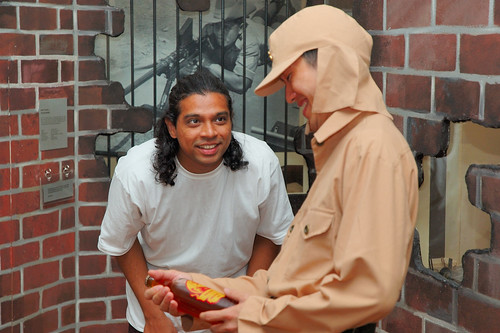
It was a play. A play about the wartime period. But it was not just a play that you watch while sitting on a small red plastic chair. It was one that managed to momentarily transport each and every one of the participants back to the war torn Singapore of 1942.

The sounds, the people, the fear and the war. All was brought before the eyes of the participants.

But you'd have to be there to feel what I've feebly tried to describe. But I do have to say that it was a very fun trail, for all of the participants and the guides too. But for this exciting event, we only held it for 2 days, on the 3rd and 4th of September 2005, and only for 2 sessions per day, once at 9am and the other at 11am.
The reason for the short duration and lowered number of session was that the guides were already low on energy after the July Heritage Fest and the small pool of guides further limits this activity. So, in hope of improving the situation, we appeal to anyone who is interested in this event to sign up as a guide! Yes! Come join us and help to extend this exciting event to others!

If you are interested, please send an email to Kiah Shen at tikigu@yahoo.com.sg ! Our next event will be around the 12th of Feb 2006, but if we have enough new guides, we may consider making this Trail a quarterly event! Do join!
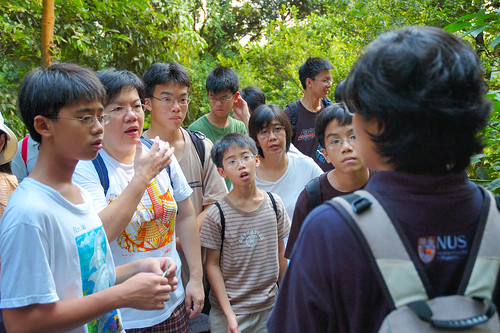
This time round, however, the 60th Anniversary Memorial Edition proved to be a multisensory, engaging and exciting journey that even surprised the guides themselves! The nature guiding portion remained the same (as it was already exciting enough, with all the green crested lizards, happy white crested laughing thrushes and oriental whip snakes basking in the morning sun) After the initial nature walk through the Kent Ridge Park, the participants were brought to the Reflections at Bukit Chandu. This was the part that was new, exciting and absolutely unexpected.

It was a play. A play about the wartime period. But it was not just a play that you watch while sitting on a small red plastic chair. It was one that managed to momentarily transport each and every one of the participants back to the war torn Singapore of 1942.

The sounds, the people, the fear and the war. All was brought before the eyes of the participants.
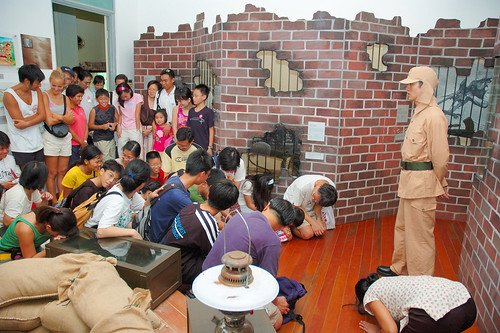
But you'd have to be there to feel what I've feebly tried to describe. But I do have to say that it was a very fun trail, for all of the participants and the guides too. But for this exciting event, we only held it for 2 days, on the 3rd and 4th of September 2005, and only for 2 sessions per day, once at 9am and the other at 11am.
The reason for the short duration and lowered number of session was that the guides were already low on energy after the July Heritage Fest and the small pool of guides further limits this activity. So, in hope of improving the situation, we appeal to anyone who is interested in this event to sign up as a guide! Yes! Come join us and help to extend this exciting event to others!
If you are interested, please send an email to Kiah Shen at tikigu@yahoo.com.sg ! Our next event will be around the 12th of Feb 2006, but if we have enough new guides, we may consider making this Trail a quarterly event! Do join!
11 September 2005
ICCS 2005 - SBWR

I came down today with a reassuring sense that things will turn out fine, from all the recce trips and correspondence we have had thus far, . The site buddies and the man and woman of the hour, Yueat Tin and Wei Siong, were really efficient in dispatching the various schools (SAS, United World College, Beatty Sec, Anderson Sec, Victoria JC, NUS). The site buddies (Marcus, Boon Ann, Kai Scene and Grace) were really good in briefing the participants and organizing the cleanup at respective sites.
The advance party set up the HQ at the center of the Kranji extension, a simple setup of only ground sheets, extra gloves and trashbags. By the time I did a quick check of all the sites, and proceeded back to the carpark, a steady stream of participants, dressed in the blue sleeved ICCS T shirt (nice design!), had already begun moving along the path towards our HQ. This is where NUS will branch off to try and link up with SAS further down. The site buddies quickly sprung into action and set the participants going. Soon the beach is covered with people trying to move around the mud properly, picking up litter, collecting data. No major crisis occurred, except that since this time round we did not do wet ops, we had to lug all the trash out using wheel barrows and big hand pushed carts. This was the most tiring part, fortunately Marcus had a team of strong men who rose to the occasion and did lots of trips carting the rubbish out. Hey Marcus, we need these men next year!
We wrapped up everything around 1pm. Which was much earlier than last year. On the whole things went smoothly. Thank you all for your unreserved help!
Some points which occurred to me during the exercise.
Siting of ‘Field HQ’ is good. We could move logistics faster this way. And we can monitor things better from there as well.
Logistics - More is better than ‘just enough’. The only situation which occurred was that we ran out of trashbags towards the end of the cleanup.
Oi Yee is fantastic as safety officer, though you were not involved in action, we could proceed with things assured with the knowledge that you are there in case anything happens. Luckily your services were not needed. Thank you so much and have a nice trip in Silk Road.
Ria was great as a photographer. Thanks Ria! Looking forward to see your fantastic photos.
Airani was really professional, she did not come out of her office throughout the entire operation and went back straight to key in data without lunch!
Water - Hmm... I’m probably going to get skinned alive by Siva for asking this, but we had water last year and I did not check if there is this year. Providing water is a double edged sword for we will generate more wastes using disposable cups!
Reforestation sites - SBWR has done extensive planting along KR 3 and 4. Since the beach is really clean there, the participants had to search really hard to find trash and in their movement, they may accidentally damage the seedlings planted. We could push most participants to help support NUS and SAS next year. This will ease the impact on the reforested areas.
Trash movement - thanks to Chen Kee, Angeline and the rest of the team coming from various sites, the tired wheel barrow team got a much needed reinforcement towards the end of the cleanup, which was the hardest as we are getting trash from SAS. For next year, we may need more manpower to move trash out.
Overall, I had a good time! Hope to join in the fun again next year.
25 July 2005
Pasir Panjang Heritage Trail 2005
The Pasir Panjang Heritage Trail is one of the activities for the Singapore Heritage Festival. This trail was jointly organised by the Raffles Museum of Biodiversity Research, NUS (RMBR) and Reflections of Bukit Chandu, National Archives of Singapore (RBC). This year, it was held on Sat 16th Jul, Sun 17th Jul and Sun 24th Jul 2005. There were 3 sessions per day at 9am, 11.30am and 2pm. The longer time between sessions allowed the guides to return to the start points for the next session more comfortably.
Overall, each session of the trail took about 2 hours, the starting point being Carpark A of Kent Ridge Park, and the end point being at Reflections at Bukit Chandu, the interactive visitor centre featuring information about the Battle of Pasir Panjang. The information conveyed to the participants during the Trail included aspects of natural history as well as culture and history, reflecting the area's rich heritage.
For the first one and a half hours, the Pasir Panjang guides led the participants around the Ridge, exploring the flora and fauna as well as explaining to them the historical background of the Ridge. This included a geographical orientation to the major sites of the battle which ensured that participants would have a better understanding of the historical significance of Bukit Chandu when they visited the museum there.
Guide training/refresher course
These sessions were invaluable and were reduced to just two sessions in the classroom and one field session. There is a lot of resources on the Pasir Panjang Heritage Webpage which guides can read up themselves. Reading up before the session and doing more quizzes or analysing text to sort out the battle complexities as we did this year was probably more interesting than the usual lecture format.
Manpower limitations
Work commitments, illnesses and injuries had left us with very few active guides, so we had to reduce the number of participants we could allow this year, to some 300+ instead of the 800+ last year.
Still, over 9 sessions, and many affected by rain, Oi Yee, Marcus, Kenneth, Kiah Shen, Wendy and Airani guided some 307 participants.
Some sessions had registered 50-60 participants instead of 40 and this exceeded the maximum participants: guides ratio, which was tough. It was also a strain to handle more than two sessions solo and the resultant sore throats and low energy levels made it clear the Pasir Panjang Heritage Trail programme is vulnerable with such small pool of guides (currently about 10 of us). So we are planning to recruit more guides soon - just a few more would be helpful. Just two new guides this year, Marcus and Kenneth, who were let loose with incomplete training, proved invaluable.
Publicity
This was done rather late but with much fewer places available this year, the last minute publicity to NUS was enough. Otterman sent out an email notice to NUS Staff through Campus Green Committee and Kiah Shen posted a notice at IVLE. That was enough to fill up all places in days.
Meeting points
This year, RBC arranged for participants to be picked up by a ferry bus from Harbour Front Centre, unlike Bouna Vista MRT station last year. This change was made in hope of attracting more participants from the East and North of the island.
Stella Wee (RBC) was on the ground to welcome and coordinate matters. It helps that RBC staff actually compile the registrations into an excel list with names and telephone numbers! It allows us to call the no shows and check if they are on their way, and reassure them if its no too late. Last year Otterman did this and also recruited some Toddycats to become volunteer ushers for the specific sessions they were attending. We must do the same next year as manpower is now more sorely needed at Harbour Pavillion, which is a much bigger place!
Harbour Pavillion was also tough because many were unfamiliar with it still - reminding them that it is the former World Trade Centre proved necessary! Stella eventually directed participants to the bus at Lobby C Coach Bay of the Singapore Cruise Centre. Since RBC staff had personally called up participants earlier so all were informed. Also their redirected their office lines to their handphones, and thus remained accessible to participants who were lost. So everyone found their way.
At Kent Ridge Park, a hiccup in communications led to a significant number of participants waiting at Carpark B instead of the new meeting point at Carpark A. The start point had been changed this year as more routes through the park could be employed this way and it minimized the distance of the route that was repeated, and provided a dramatic surprise for participants later with the view of the Southern Islands.
During the first session, there was heavy rain and the ferry from Harbour Pavillion picked up the waiting participants who drove at Kent Ridge Park, and headed over to RBC. So the trail was conducted in reverse and that worked out well.
Path maintenance
A difficulty experienced during guiding was the fact that the NParks has been pruning the plants along the paths very frequently! The luxury of pointing out a plant from the path was lost to us and participants were coaxed onto ant-filled grass to view the plant closely. Thus the more urbanised participants who would not leave the concrete path did not examine the plants closely.
More significantly, the natural shapes of the plants were altered by the pruning. For example, many Simpoh Air plants have been pruned to look like trees instead of bushes, preventing the visitor from recognising the natural shape of the plant.
Perhaps we can persuade NParks tto leave certain signature trees alone, and even add a label to it so that it would be possible to learn a range of plants by walking around the park.
Guidesheets
The guidesheets (which were prepared in 2000) could be revised as some of the plants are not included. There was insufficient time for a proper lunch break and rest before the 2pm session but bringing our own packed lunches would solve the problem. Or more guides would solve that as we could each do two sessions.
Guide response
Overall, the ability of the guides to react quickly to the wet weather and the performance of the new and veteran guides were commendable. Thanks for the good job everyone! For the guides that were unable to turn up, don't despair! There is still the 60th Anniversary Commemorative walk on the 3rd and 4th of September.

Heritage Trail

Appended by N. Sivasothi
Overall, each session of the trail took about 2 hours, the starting point being Carpark A of Kent Ridge Park, and the end point being at Reflections at Bukit Chandu, the interactive visitor centre featuring information about the Battle of Pasir Panjang. The information conveyed to the participants during the Trail included aspects of natural history as well as culture and history, reflecting the area's rich heritage.
For the first one and a half hours, the Pasir Panjang guides led the participants around the Ridge, exploring the flora and fauna as well as explaining to them the historical background of the Ridge. This included a geographical orientation to the major sites of the battle which ensured that participants would have a better understanding of the historical significance of Bukit Chandu when they visited the museum there.
Guide training/refresher course
These sessions were invaluable and were reduced to just two sessions in the classroom and one field session. There is a lot of resources on the Pasir Panjang Heritage Webpage which guides can read up themselves. Reading up before the session and doing more quizzes or analysing text to sort out the battle complexities as we did this year was probably more interesting than the usual lecture format.
Manpower limitations
Work commitments, illnesses and injuries had left us with very few active guides, so we had to reduce the number of participants we could allow this year, to some 300+ instead of the 800+ last year.
Still, over 9 sessions, and many affected by rain, Oi Yee, Marcus, Kenneth, Kiah Shen, Wendy and Airani guided some 307 participants.
Some sessions had registered 50-60 participants instead of 40 and this exceeded the maximum participants: guides ratio, which was tough. It was also a strain to handle more than two sessions solo and the resultant sore throats and low energy levels made it clear the Pasir Panjang Heritage Trail programme is vulnerable with such small pool of guides (currently about 10 of us). So we are planning to recruit more guides soon - just a few more would be helpful. Just two new guides this year, Marcus and Kenneth, who were let loose with incomplete training, proved invaluable.
Publicity
This was done rather late but with much fewer places available this year, the last minute publicity to NUS was enough. Otterman sent out an email notice to NUS Staff through Campus Green Committee and Kiah Shen posted a notice at IVLE. That was enough to fill up all places in days.
Meeting points
This year, RBC arranged for participants to be picked up by a ferry bus from Harbour Front Centre, unlike Bouna Vista MRT station last year. This change was made in hope of attracting more participants from the East and North of the island.
Stella Wee (RBC) was on the ground to welcome and coordinate matters. It helps that RBC staff actually compile the registrations into an excel list with names and telephone numbers! It allows us to call the no shows and check if they are on their way, and reassure them if its no too late. Last year Otterman did this and also recruited some Toddycats to become volunteer ushers for the specific sessions they were attending. We must do the same next year as manpower is now more sorely needed at Harbour Pavillion, which is a much bigger place!
Harbour Pavillion was also tough because many were unfamiliar with it still - reminding them that it is the former World Trade Centre proved necessary! Stella eventually directed participants to the bus at Lobby C Coach Bay of the Singapore Cruise Centre. Since RBC staff had personally called up participants earlier so all were informed. Also their redirected their office lines to their handphones, and thus remained accessible to participants who were lost. So everyone found their way.
At Kent Ridge Park, a hiccup in communications led to a significant number of participants waiting at Carpark B instead of the new meeting point at Carpark A. The start point had been changed this year as more routes through the park could be employed this way and it minimized the distance of the route that was repeated, and provided a dramatic surprise for participants later with the view of the Southern Islands.
During the first session, there was heavy rain and the ferry from Harbour Pavillion picked up the waiting participants who drove at Kent Ridge Park, and headed over to RBC. So the trail was conducted in reverse and that worked out well.
Path maintenance
A difficulty experienced during guiding was the fact that the NParks has been pruning the plants along the paths very frequently! The luxury of pointing out a plant from the path was lost to us and participants were coaxed onto ant-filled grass to view the plant closely. Thus the more urbanised participants who would not leave the concrete path did not examine the plants closely.
More significantly, the natural shapes of the plants were altered by the pruning. For example, many Simpoh Air plants have been pruned to look like trees instead of bushes, preventing the visitor from recognising the natural shape of the plant.
Perhaps we can persuade NParks tto leave certain signature trees alone, and even add a label to it so that it would be possible to learn a range of plants by walking around the park.
Guidesheets
The guidesheets (which were prepared in 2000) could be revised as some of the plants are not included. There was insufficient time for a proper lunch break and rest before the 2pm session but bringing our own packed lunches would solve the problem. Or more guides would solve that as we could each do two sessions.
Guide response
Overall, the ability of the guides to react quickly to the wet weather and the performance of the new and veteran guides were commendable. Thanks for the good job everyone! For the guides that were unable to turn up, don't despair! There is still the 60th Anniversary Commemorative walk on the 3rd and 4th of September.

Heritage Trail

Appended by N. Sivasothi
06 July 2005
Public Briskwalks in June
Two briskwalks were conducted on the first and third Sunday of June.
This is the first time I help to co-ordinate a public walk. It was actually a very easy job on my part. Siva takes care of the web page (which is a one-stop information centre) and gets all the registration emails. Anand takes note of which regulars are coming to help out. I think about the route, take note of dates, number of people coming, send reminders, and either take pictures or get help taking pics. Miscellaneous stuff mainly. But I enjoyed what I did.
The route decision took a bit of thinking. Some of us preferred the scenic way by the reservior, some prefer the other way. It was the same distance more or less. But my personal preference (being not as fit) was the scenic way, because a sunrise over water (yes it may be artificial but still its a nice scene) makes one feel more exhilarated. And there are more changes in scenery, not just trees on both sides. The path also feels less "pebbled". At first the summit route was closed. But I am quite glad it opened in time for public walk. Because as someone (forgot who??!!) told me, ending at the summit gives everyone a great sense of satisfaction. And its a good photo point as well.
I was worried about the turn-out being very poor on the actual days, about not enough regulars being around and about what if some accident happened along the way. Yes, I think too much. Anyway, for the turn out, spreading the word on habitatnews and wildsingapore, ivle and to friends and family seemed to work. As for the regulars, I realised that when there are reliable people, there is no need to worry. And since Anand is taking charge there, I should worry even less! As for the accidents happening, the path is really well marked and there are so many other people walking it. Really quite safe. And if anything happens, we all have hp handy!
Most of all, I enjoyed the actual days. Due to the early mornings, a lot of people who sign up will not show up. But sometimes, people who have not signed up come as well. So no matter how many or how few people come, we will just adjust and walk. The regulars are all so at ease with the walking and all, everything ran quite smoothly. All there is to do for me was to greet and chat with the people who come. I found that words of encouragement, smiles and some small talk to distract people from fatigue is useful.
One thing to note, you definitely need more than one cameraman and they all need to be fit! I for one found it hard to take pictures and walk at the same time. Spoils the momentum.
This is the first time I help to co-ordinate a public walk. It was actually a very easy job on my part. Siva takes care of the web page (which is a one-stop information centre) and gets all the registration emails. Anand takes note of which regulars are coming to help out. I think about the route, take note of dates, number of people coming, send reminders, and either take pictures or get help taking pics. Miscellaneous stuff mainly. But I enjoyed what I did.
The route decision took a bit of thinking. Some of us preferred the scenic way by the reservior, some prefer the other way. It was the same distance more or less. But my personal preference (being not as fit) was the scenic way, because a sunrise over water (yes it may be artificial but still its a nice scene) makes one feel more exhilarated. And there are more changes in scenery, not just trees on both sides. The path also feels less "pebbled". At first the summit route was closed. But I am quite glad it opened in time for public walk. Because as someone (forgot who??!!) told me, ending at the summit gives everyone a great sense of satisfaction. And its a good photo point as well.
I was worried about the turn-out being very poor on the actual days, about not enough regulars being around and about what if some accident happened along the way. Yes, I think too much. Anyway, for the turn out, spreading the word on habitatnews and wildsingapore, ivle and to friends and family seemed to work. As for the regulars, I realised that when there are reliable people, there is no need to worry. And since Anand is taking charge there, I should worry even less! As for the accidents happening, the path is really well marked and there are so many other people walking it. Really quite safe. And if anything happens, we all have hp handy!
Most of all, I enjoyed the actual days. Due to the early mornings, a lot of people who sign up will not show up. But sometimes, people who have not signed up come as well. So no matter how many or how few people come, we will just adjust and walk. The regulars are all so at ease with the walking and all, everything ran quite smoothly. All there is to do for me was to greet and chat with the people who come. I found that words of encouragement, smiles and some small talk to distract people from fatigue is useful.
One thing to note, you definitely need more than one cameraman and they all need to be fit! I for one found it hard to take pictures and walk at the same time. Spoils the momentum.
Raffles Museum Public Gallery Guiding: A Recent Experience!
On 25th June 2005, 21 young children, age ranging from kindergarten to primary four, and 2 teachers from a childcare centre, visited the museum gallery. Gwynne and I were roped in the last minute to guide them.
The initial strategy was to have an introduction to the whole group. However we split into 2 groups immediately, as I realized I would not be able to give a good introduction that would capture their attention.
Fortunately their teachers were in my group and I was able to have a better control of the children. I also had better attention from them. Because of this, I was able to deliver my stories completely most of the time without much interruption.
My guiding strategy was to give a brief introduction on the function of the museum, and then hold their attention with as many interesting stories as possible. This strategy worked and I was just able to complete one round of the gallery just as I ran out of stories to tell them. The lack of stories was due to the lack of biology background I have. I dare not talk about the scientific aspect of the specimens, as I do not want to give misinformation. This is one area I must work upon and I believe it will be a major problem for guides without biology background. One example was when they asked me about the flying fox and I was stumped since I knew nothing about it. Luckily Siva was around to helped me answer that question.
For presentation, I told my facts like stories and kept them as simple as possible to fit into their short attention span. I was speaking in kiddie and drama mode and using a lot of dramatic hand gesture. I basically became a storyteller. I also posted a lot of simple questions as I found the audience very eager to answer and it helped me in focusing their attention on the specimens I was talking about. It also gained me a better control of the children.
The biggest problem I had during the guiding was the handling of the comments thrown at me simultaneously from the children. Most of the comments were distantly relevant and at times disrupted the story. Yet I believe it is courtesy to reply to these comments yet not to lose the control and attention of the children.
For the comments that came at the end of the story, I would acknowledge the commenter who was still maintaining the eye contact with me, usually with a very short answer. I would then attempt to gain back the control and attention by gathering them to the next specimen I would like to talk about. For the comments that came in the middle of the story, I would only acknowledge if the comment was relevant or I could use the comment to link to my next point in the story.
On the whole, I enjoyed the experience. I would be able to do a better job if I was more mentally prepared so that I would not struggle in presenting my content. I was also nervous throughout the entire guiding. Both factors contributed a lot to my stuttering. Lastly, I would rate myself a 6.5 out of 10 for my performance.
What a relief when it finally ended!
The initial strategy was to have an introduction to the whole group. However we split into 2 groups immediately, as I realized I would not be able to give a good introduction that would capture their attention.
Fortunately their teachers were in my group and I was able to have a better control of the children. I also had better attention from them. Because of this, I was able to deliver my stories completely most of the time without much interruption.
My guiding strategy was to give a brief introduction on the function of the museum, and then hold their attention with as many interesting stories as possible. This strategy worked and I was just able to complete one round of the gallery just as I ran out of stories to tell them. The lack of stories was due to the lack of biology background I have. I dare not talk about the scientific aspect of the specimens, as I do not want to give misinformation. This is one area I must work upon and I believe it will be a major problem for guides without biology background. One example was when they asked me about the flying fox and I was stumped since I knew nothing about it. Luckily Siva was around to helped me answer that question.
For presentation, I told my facts like stories and kept them as simple as possible to fit into their short attention span. I was speaking in kiddie and drama mode and using a lot of dramatic hand gesture. I basically became a storyteller. I also posted a lot of simple questions as I found the audience very eager to answer and it helped me in focusing their attention on the specimens I was talking about. It also gained me a better control of the children.
The biggest problem I had during the guiding was the handling of the comments thrown at me simultaneously from the children. Most of the comments were distantly relevant and at times disrupted the story. Yet I believe it is courtesy to reply to these comments yet not to lose the control and attention of the children.
For the comments that came at the end of the story, I would acknowledge the commenter who was still maintaining the eye contact with me, usually with a very short answer. I would then attempt to gain back the control and attention by gathering them to the next specimen I would like to talk about. For the comments that came in the middle of the story, I would only acknowledge if the comment was relevant or I could use the comment to link to my next point in the story.
On the whole, I enjoyed the experience. I would be able to do a better job if I was more mentally prepared so that I would not struggle in presenting my content. I was also nervous throughout the entire guiding. Both factors contributed a lot to my stuttering. Lastly, I would rate myself a 6.5 out of 10 for my performance.
What a relief when it finally ended!
Subscribe to:
Posts (Atom)
